Up to 30% off now
Is There Really Such a Thing as a Teacup Yorkie?
Are teacup Yorkies a real breed? Learn the truth about tiny Yorkies, their health risks, ethical breeding concerns, and what to know before buying one.
Kimberly — Founder, Bad & Boujee Pets
5/28/202614 min read
Affiliate Disclosure: This post contains affiliate links. If you purchase through a link on this page, Bad & Boujee Pets may earn a small commission at no extra cost to you. We only recommend products we genuinely love and trust for our fur babies. Thank you for supporting our small business! 🐾
Every few weeks, a video goes viral. A tiny, silky-haired dog — barely bigger than a human hand — peers out from a designer handbag, blinking at the camera with enormous dark eyes. The comments explode instantly. Thousands of hearts, hundreds of shares, and an avalanche of "I NEED one" flooding the replies. If you've spent any time on TikTok or Instagram in the last few years, you already know the dog we're talking about: the so-called teacup Yorkie.
These miniature, pocket-sized pups have become one of the most searched, most pinned, and most purchased "designer dogs" in the United States — and the obsession shows no signs of slowing down. But beneath the adorable aesthetics and luxury lifestyle branding, a genuinely important question keeps surfacing: Are teacup Yorkies even a real breed? And if they are, should you actually own one?
The answer, like most things worth knowing, is more complicated than a viral video will ever tell you. Let's break it all down — honestly, responsibly, and with a whole lot of love for these little dogs at the center of it all.
What Is a Teacup Yorkie, Really?
Let's start with the facts. The Yorkshire Terrier is a fully recognized, well-established breed registered with the American Kennel Club (AKC). Yorkies have been a beloved companion breed since the 19th century, originally bred in England to catch rats in textile mills. They're feisty, loyal, surprisingly bold for their size, and endlessly charming. The AKC breed standard describes a Yorkshire Terrier as a compact dog not exceeding 7 pounds.
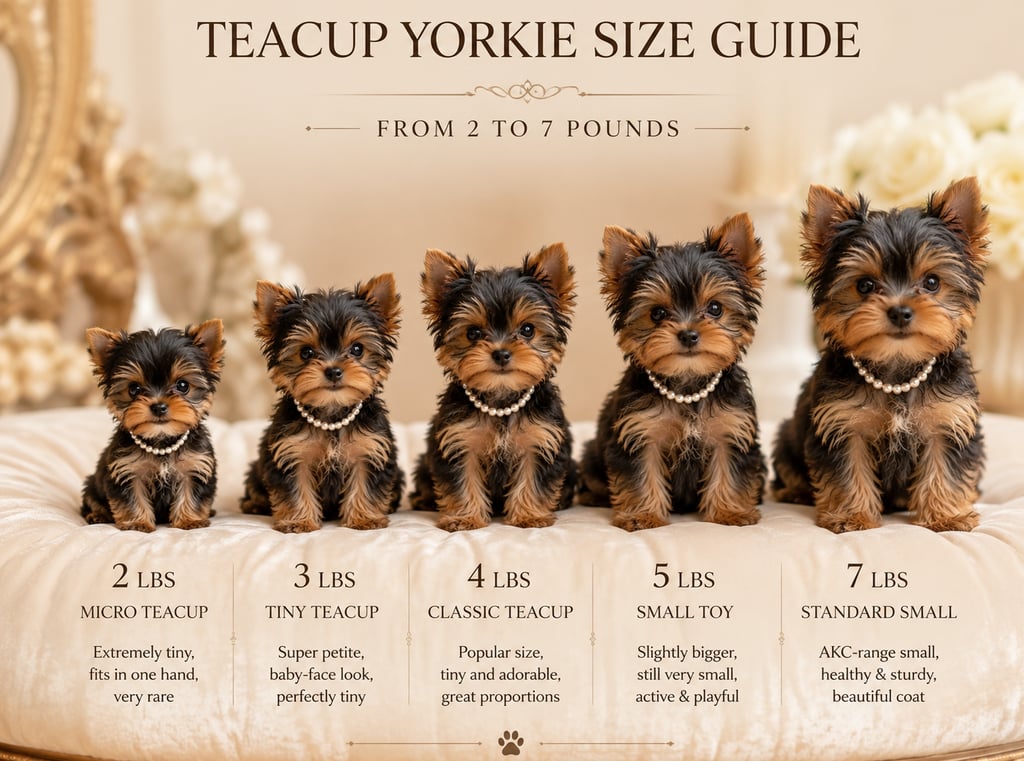
Here's where things get complicated: the term "teacup Yorkie" is not an official AKC designation, a separate breed, or a recognized size category. It is, at its core, a marketing term — one that breeders and sellers use to describe Yorkshire Terriers that are bred to be exceptionally small, typically weighing between 2 and 4 pounds at adulthood.
The phrase "teacup" conjures images of luxury, exclusivity, and cuteness, and it absolutely delivers on that promise from an aesthetics standpoint. But from a veterinary and ethical standpoint, the term carries very real concerns that every prospective owner deserves to understand before falling head over heels.
A micro Yorkie or miniature Yorkie (other popular marketing terms for the same concept) is usually produced through one of a few methods: selectively breeding the runts of multiple litters together over generations, introducing dwarfism genes, or simply selling undersized puppies before their full growth potential is known. None of these approaches are without risk — and some carry serious consequences for the dogs themselves.
Why Are Teacup Yorkies So Popular Online?
If you want to understand the teacup Yorkie craze, you have to understand the culture that created it.
Designer dog culture has been building for decades, but social media gave it rocket fuel. Platforms like Instagram and TikTok reward visual content, and few things perform better than an impossibly tiny dog dressed in a couture bow, riding in a Louis Vuitton carrier. Celebrity pet culture — Paris Hilton's Tinkerbell, the endless parade of "purse dogs" carried by reality TV stars — created a luxury lifestyle template that millions of followers wanted to replicate.
The luxury dog lifestyle aesthetic is real and it's powerful. And honestly? There's nothing inherently wrong with wanting a beautifully styled, pampered, well-loved small dog. The problem comes when the size of the dog becomes the most important feature, and the health and longevity of the animal become secondary considerations.
Today, a simple search for "teacup Yorkie" on TikTok returns millions of views. Breeders post videos of palm-sized puppies to their social accounts and command waiting lists months — sometimes years — long. Prices for teacup Yorkie puppies can range from $1,500 to well over $10,000 depending on the breeder, the lineage, and just how small the dog is marketed to be. The smaller the dog, the higher the price tag — a dynamic that, unfortunately, incentivizes some breeders to push size extremes further than is medically responsible.
Real Comments From Viral Teacup Yorkie Videos (And What They Actually Mean)
Scroll through the comments on any popular teacup Yorkie video and you'll find the full spectrum of public opinion playing out in real time. Here's a look at some of the most common reactions — and the nuanced truth behind each one.
"That dog looks unhealthy."
This one is worth taking seriously. Some extremely small Yorkies do show visible signs of distress — sunken features, oversized heads relative to body, difficulty walking, visible trembling. These can be signs of serious health conditions. However, not every small Yorkie is unhealthy. Context matters enormously — a vet-cleared, well-nourished tiny Yorkie can appear perfectly fine on camera.
"I want one so bad 😍"
Completely understandable. These dogs are objectively adorable. The desire to own one is valid — what matters is how you act on it. Do your research, find an ethical breeder, and go in with eyes wide open about the care commitment.
"Breeding dogs this tiny is cruel."
There are legitimate veterinary voices who share this concern. Intentionally breeding for extreme smallness can prioritize aesthetics over the animal's well-being. This is the heart of the ethical debate, and it deserves honest acknowledgment rather than dismissal.
"My teacup Yorkie lived 15 years and never had a health problem."
This is also a real story that real owners tell — and it's true. Not every tiny Yorkie suffers. Some individuals are genuinely hardy, well-bred small dogs who live full, healthy lives. Anecdotal success stories don't erase population-level health data, but they're also not lies.
"That's not a teacup, that's just a small Yorkie."
Technically? Often correct. Many dogs marketed as "teacup" are simply smaller-than-average standard Yorkies — which is not inherently alarming. The concern rises when breeders are actively engineering for extreme miniaturization rather than simply selecting naturally smaller dogs.
"People need to stop shrinking dogs for aesthetics."
A fair critique of irresponsible breeding practices — though it's worth noting the distinction between selecting naturally small dogs and deliberately engineering unhealthy ones.
"Tiny dogs are harder to care for than people realize."
Absolutely true. This point doesn't get nearly enough airtime in the viral videos.
Teacup Yorkie Health Problems: What Every Owner Must Know
This section isn't meant to scare you — it's meant to prepare you. Because if you're serious about owning a tiny Yorkie, understanding the health landscape is one of the most loving things you can do for your future dog.
Hypoglycemia (Low Blood Sugar): This is one of the most common and dangerous conditions in very small dogs. Teacup and micro Yorkies have so little body mass that their blood sugar can crash rapidly — sometimes within hours — especially as puppies. Symptoms include lethargy, trembling, glassy eyes, and in severe cases, seizures or loss of consciousness. Owners of extremely small Yorkies often need to feed their puppies every 2-3 hours and keep glucose supplements on hand at all times.
Fragile Bones: A dog that weighs 2-3 pounds has bones to match. A fall from a couch, a misstep off a stair, or even an accidental squeeze can result in fractures. Many teacup Yorkie owners describe living in a state of constant vigilance — keeping the dog away from children, other pets, and any elevated surfaces.
Dental Problems: Yorkies already have notoriously crowded teeth for their jaw size. In extremely small Yorkies, this problem compounds significantly. Overcrowded, impacted, and retained baby teeth are common, often requiring expensive dental surgeries.
Liver Shunts (Portosystemic Shunt): Yorkshire Terriers as a breed have a genetic predisposition to liver shunts — abnormal blood vessels that bypass the liver. In very small dogs, this condition can be even more pronounced and is often not diagnosed until the dog shows neurological symptoms or fails to thrive. Treatment can range from dietary management to expensive surgery.
Collapsed Trachea: Small dog breeds are already prone to tracheal collapse, a condition where the cartilage rings of the windpipe weaken and flatten, causing a chronic honking cough. The smaller the dog, the greater the risk.
Temperature Regulation: Tiny dogs have very little body fat and struggle to maintain their own body temperature. In cold weather, a teacup Yorkie can become hypothermic quickly. Sweaters and climate control aren't just fashion — for these dogs, they're a health necessity.
Anesthesia Risks: Veterinary procedures that require anesthesia carry higher risks in very small dogs. Their low body mass, fragile respiratory systems, and tendency toward hypoglycemia make even routine surgeries a more serious undertaking.
The bottom line: regular vet care is non-negotiable for any small Yorkie, and especially for extremely tiny ones. A strong relationship with an experienced veterinarian who knows small breeds is one of the most important investments you can make.
Are Teacup Yorkies Ethical? An Honest Discussion
This is the question at the heart of the entire debate — and it doesn't have a simple answer.
Responsible, ethical breeders who prioritize health testing, genetic screening, and the overall well-being of their breeding dogs do exist. Some of them produce naturally smaller Yorkies from healthy bloodlines without deliberately engineering extremes. These breeders are typically transparent about health records, offer health guarantees, allow you to visit their facility, and are vetted members of breed clubs like the Yorkshire Terrier Club of America.
Backyard breeders and puppy mills, on the other hand, have been quick to capitalize on the teacup trend. For these operations, "teacup" is a profit motive, not a breeding philosophy. The dogs bred in these environments often haven't been health tested. The parents are sometimes bred repeatedly and kept in poor conditions. The puppies may be sold far too young, before their immune systems or blood sugar regulation has stabilized.
The rise of designer dog culture and social media virality has supercharged demand in ways the breeding world simply wasn't prepared for. When a specific look goes viral, unscrupulous breeders flood the market to meet demand — and buyers, driven by excitement and emotion, often don't ask the right questions.
This isn't a judgment of people who love tiny dogs. It's a call for awareness. The most loving thing you can do for any dog — whether you're drawn to a teacup Yorkshire Terrier or any other breed — is to ensure the animal was bred responsibly and is coming from a healthy, ethical environment.
What Is the Ideal Healthy Yorkie Size?
According to the AKC breed standard, a properly sized Yorkshire Terrier weighs no more than 7 pounds, with most healthy, well-bred Yorkies falling between 4 and 7 pounds. Dogs in this range are small enough to be portable and suited to apartment living, but large enough to have structurally sound bones, proper dental spacing, and a more resilient constitution.
Yorkies that fall between 4 and 6 pounds are often described by breeders as "small Yorkies" or "petite Yorkies" and represent a sweet spot — they have the compact, adorable appearance that draws people to the breed without the heightened health risks of extreme miniaturization.
When a dog is consistently bred down below 3-4 pounds, structural and metabolic risks increase significantly. A healthy dog with a great temperament and a long, happy life ahead of it matters far more than a dog that fits a certain size aesthetic — and any reputable breeder will tell you exactly that.
What to Know Before Buying a Teacup Yorkie
If you've done your research and your heart is set on a tiny Yorkie, here's how to approach the process responsibly.
Questions to ask every breeder:
Can I see health clearances for both parents?
Have the puppies been examined by a licensed veterinarian?
Is the puppy free of liver shunts, heart defects, and other congenital conditions?
Can I visit your facility or meet the parents?
Do you offer a health guarantee?
Are you a member of any breed clubs or associations?
Red flags to watch for:
Breeders who refuse to let you visit or meet the parents
Puppies available at 6 weeks old (too young — 10-12 weeks is standard)
No vet records or health documentation
Prices that seem too good to be true
Breeders who market based exclusively on size ("the smallest you'll ever find!")
Anyone selling puppies via wire transfer only
Realistic cost expectations: A well-bred, health-tested small Yorkie from a reputable breeder will typically cost between $3,000 and $8,000 or more. First-year veterinary costs — including vaccines, spay/neuter, and any early health interventions — can add another $1,000 to $3,000. Ongoing dental care, quality nutrition, grooming, and emergency vet coverage are lifetime financial commitments.
Daily care essentials: Frequent small feedings, especially for puppies. High-quality nutrition formulated for small breeds. Consistent grooming (Yorkies have hair, not fur, and it grows continuously). Regular dental cleanings. Careful supervision around stairs, furniture edges, and larger animals.
The Luxury Lifestyle vs. The Real Responsibility
Let's be real for a moment — because this is a luxury pet lifestyle brand and we're not going to pretend the aesthetic isn't part of the appeal.
Yes, a tiny Yorkie in a cashmere sweater, tucked into a designer carrier, is one of the most objectively beautiful sights in the dog world. The Yorkie puppy care routine — the silk bows, the coat conditioning, the tiny harnesses — is genuinely fun and genuinely luxurious. Traveling with a small dog, bringing them to boutiques and hotels that welcome pets, dressing them for the seasons: these are real and wonderful parts of the luxury dog lifestyle that Yorkie owners love.
But the most important accessory any small dog can have isn't a monogrammed carrier — it's a prepared, committed, financially stable, and emotionally present owner.
Small dogs — and especially extremely tiny ones — require a level of awareness and care that many first-time owners genuinely underestimate. They can't be left unsupervised for long stretches. They can't roughhouse with large dogs. They need veterinary relationships, not just occasional check-ins. They need owners who will recognize the early signs of hypoglycemia, who won't skip the dental cleaning because it's expensive, who will be there through the complications that inevitably come with a small, fragile body over a 12-15 year lifespan.
The most luxurious thing you can give a tiny dog isn't a designer outfit. It's a long, healthy, well-loved life. That's the real flex.
Frequently Asked Questions About Teacup Yorkies
Are teacup Yorkies recognized by the AKC? No. The American Kennel Club only recognizes the standard Yorkshire Terrier. "Teacup" is not an official size category or breed designation — it is a marketing term used by breeders and sellers to describe unusually small Yorkies.
How long do teacup Yorkies live? The Yorkie lifespan for standard, healthy dogs is typically 12 to 15 years. Very small or "teacup" Yorkies may have shorter lifespans depending on their overall health, genetics, and the conditions under which they were bred. Dogs with serious congenital conditions may have significantly shorter lives, while healthy smaller Yorkies can live well into their teens.
How much do teacup Yorkies weigh? Dogs marketed as teacup Yorkies typically weigh between 2 and 4 pounds at adulthood. Standard Yorkies should not exceed 7 pounds per AKC standards. A healthy "petite" Yorkie might fall between 4 and 6 pounds.
Are teacup Yorkies unhealthy? Not automatically — but extremely small Yorkies carry elevated risks for several health conditions, including hypoglycemia, liver shunts, collapsed trachea, fragile bones, and dental problems. Health outcomes vary significantly based on genetics and the quality of breeding. Always consult a veterinarian before purchasing.
Why are teacup Yorkies so expensive? The high price reflects both demand (driven largely by social media) and, in legitimate cases, the cost of ethical breeding practices, health testing, veterinary care for the mother and puppies, and the rarity of producing consistently small but healthy dogs. Be cautious of prices that seem too low — they often indicate poor breeding conditions.
Do teacup Yorkies bark a lot? Yorkshire Terriers in general can be vocal, alert, and quick to bark. They were originally bred as working dogs and carry that bold, confident temperament despite their small size. Early socialization and consistent training can help manage excessive barking.
Are teacup Yorkies good family dogs? They can be wonderful companions for the right family — but they are generally better suited to homes without very young children. Their fragility means accidental rough handling can cause serious injury. They thrive in calm, attentive households.
Can teacup Yorkies fly on airplanes? Many airlines allow small dogs to fly in the cabin in an approved carrier, provided they meet size and weight requirements. Most major airlines require the carrier to fit under the seat and the dog to remain in the carrier throughout the flight. Always check your specific airline's pet policy before booking. Given their sensitivity to stress and temperature changes, consult your vet before flying with a very small Yorkie.
Are miniature Yorkies different from regular Yorkies? "Miniature Yorkie," "micro Yorkie," and "teacup Yorkie" are all informal terms for Yorkshire Terriers bred to be smaller than the AKC standard. They are not separate breeds. The difference is primarily size — and the health considerations that come with extreme smallness.
What should I feed a teacup Yorkie? High-quality, small-breed dry or wet food is generally recommended. Teacup puppies especially need frequent small meals to prevent hypoglycemia. Your veterinarian is the best resource for a feeding plan tailored to your specific dog's size and health needs.
How do I find an ethical teacup Yorkie breeder? Look for breeders affiliated with the Yorkshire Terrier Club of America, who health test their breeding dogs, offer transparent facility visits, provide full veterinary records, and don't market based exclusively on extreme smallness. Take your time. A responsible breeder will welcome your questions.
Are teacup Yorkies high-maintenance? Yes, in a word. Their grooming needs are significant (Yorkie coats require regular brushing, trimming, and conditioning). Their health needs demand vigilance. Their small size requires constant awareness of their environment. They are deeply rewarding dogs — but they are not low-effort companions.
A Final Word: Every Dog Deserves More Than a Trend
There's a version of the teacup Yorkie story that ends beautifully — a tiny, silky dog curled up in the lap of someone who researched their breeder for six months, who has a vet they trust completely, who bought the right carrier and the right food and took the time to understand what their dog actually needs. That dog lives a long, indulged, genuinely luxurious life. That story is real and it happens every day.
There's another version where a buyer sees a viral video, impulse-purchases a puppy from an online listing, and realizes weeks later that the dog has a liver shunt or severe hypoglycemia — and faces either devastating vet bills or heartbreaking decisions.
The difference between those two stories almost always comes down to preparation, research, and a commitment to prioritizing the dog's health over the aesthetic of owning the smallest, most Instagram-worthy pet on the block.
At Bad & Boujee Pets, we believe you can have both. Style and substance. Beauty and responsibility. A gorgeous, tiny dog and a healthy one. But it starts with knowing the truth — all of it — before you fall in love with a face on your phone screen.
Every dog, no matter how small, deserves an owner who chose them with open eyes and a full heart.
Consult with ethical breeders. Talk to your veterinarian. Ask the hard questions. And when you bring that tiny bundle of silk and sass home — love them with everything you've got.
Related Articles You'll Love
"The Ultimate Yorkie Wardrobe Guide: Luxury Outfits for Every Season" — Because your Yorkie deserves a closet as fabulous as yours.
"Best Harnesses for Small Dogs: Why the Right Fit Could Save Your Yorkie's Life" — Collars vs. harnesses for tiny breeds, plus our top luxury picks.
"Traveling in Style: The Best Pet-Friendly Hotels for You and Your Small Dog" — Five-star stays that welcome your four-legged plus-one.
"Yorkie Grooming 101: Silk Bows, Coat Care, and Everything In Between" — Keep that iconic Yorkie coat looking runway-ready.
"Small Dog, Big Personality: Understanding Your Yorkie's Temperament and Training Needs" — Because a well-trained Yorkie is the ultimate luxury.
Shop Our Bad & Boujee Favorites (Affiliate Links)
These are products we personally love and recommend for teacup and small Yorkie owners. As always, consult your vet before introducing new supplements or foods to your dog's routine.
Affiliate Disclosure: The links below are affiliate links. Bad & Boujee Pets earns a small commission on qualifying purchases at no extra cost to you.
🩺 Health & Wellness
Nutri-Cal High Calorie Nutritional Supplement for Dogs A must-have for teacup Yorkie owners — helps prevent dangerous hypoglycemia episodes in small puppies and adults. Keep this in your bag at all times. 👉 Shop Nutri-Cal on Amazon
🧳 Carriers & Travel
Sherpa Original Deluxe Airline-Approved Pet Carrier Stylish, ventilated, and airline-cabin approved. Perfect for your tiny Yorkie on the go — whether it's a boutique run or a cross-country flight. 👉 Shop Sherpa Pet Carrier on Amazon
🍗 Nutrition
Royal Canin Yorkshire Terrier Adult Dry Dog Food Breed-specific formula designed for the Yorkie's unique jaw structure, coat needs, and metabolism. One of the most vet-recommended foods for the breed. 👉 Shop Royal Canin Yorkie Food on Amazon
✂️ Grooming
Chris Christensen Ice on Ice Detangling Spray A luxury grooming staple for long-coated breeds. Keeps your Yorkie's silky hair tangle-free, shiny, and runway-ready between baths. 👉 Shop Chris Christensen Detangling Spray on Amazon
🦺 Harnesses
Puppia Soft Dog Harness for Small Breeds Ditch the collar — this lightweight, padded harness keeps pressure off your Yorkie's delicate trachea. Available in adorable colors and patterns. 👉 Shop Puppia Harness on Amazon
About the Author
Kim is the founder of Bad & Boujee Pets and proud dog mom to Chloe and Fendi. As a pet parent, content creator, and pet lifestyle enthusiast, she shares dog care tips, product recommendations, breed insights, and real-life experiences to help pet parents make informed decisions and give their dogs the happiest, healthiest life possible. Through Bad & Boujee Pets, Kim combines her love for dogs, fashion, and pet wellness to create helpful resources and stylish inspiration for modern dog families.
Bad & Boujee Pets
Bad & Boujee Pets is where style meets comfort for your pup.We create fashionable, high-quality accessories designed to turn heads on every walk.
As an Amazon Associate, we earn from qualifying purchases. Some links on this site are affiliate links, which means we may earn a small commission at no extra cost to you.
Contact
Join The Boujee Pack
hello@badnboujeepets.com
© 2026 All rights reserved.